


















Collections and objects
Digitise artworks, artefacts, documents or products and present them with context.
Digital exhibitions for institutions
V21 Artspace works with museums, universities, foundations, public bodies, central banks and companies to turn significant collections and institutional heritage into engaging digital experiences.
Our roots are in art and culture. That curatorial and visual sensitivity also suits organisations whose collections may include archives, objects, documents, artworks, architecture or corporate heritage.
Selected organisations we have worked with
The format follows the collection and the audience. We can document an existing display, design a new virtual environment or build a structured online home for material that is rarely seen.
Digitise artworks, artefacts, documents or products and present them with context.
Bring milestones, records and stories together in a lasting, navigable experience.
Share exhibitions through a browser with audiences, staff and stakeholders wherever they are.
From source material to public story
Large institutional collections often contain long reports, technical records and substantial PDFs. They may not look immediately engaging, but they can hold the decisions, people and turning points that explain how an organisation came into being. We shape that material into a clear visual journey while keeping the source documents available for deeper exploration.
01
Identify the milestones, voices and decisions that give specialist material public relevance.
02
Lead with concise interpretation, timelines and selected details, with original documents available when visitors want to go further.
03
Use architecture, imagery, sound and interaction to create pace and connection around document-led content.
Institutional project
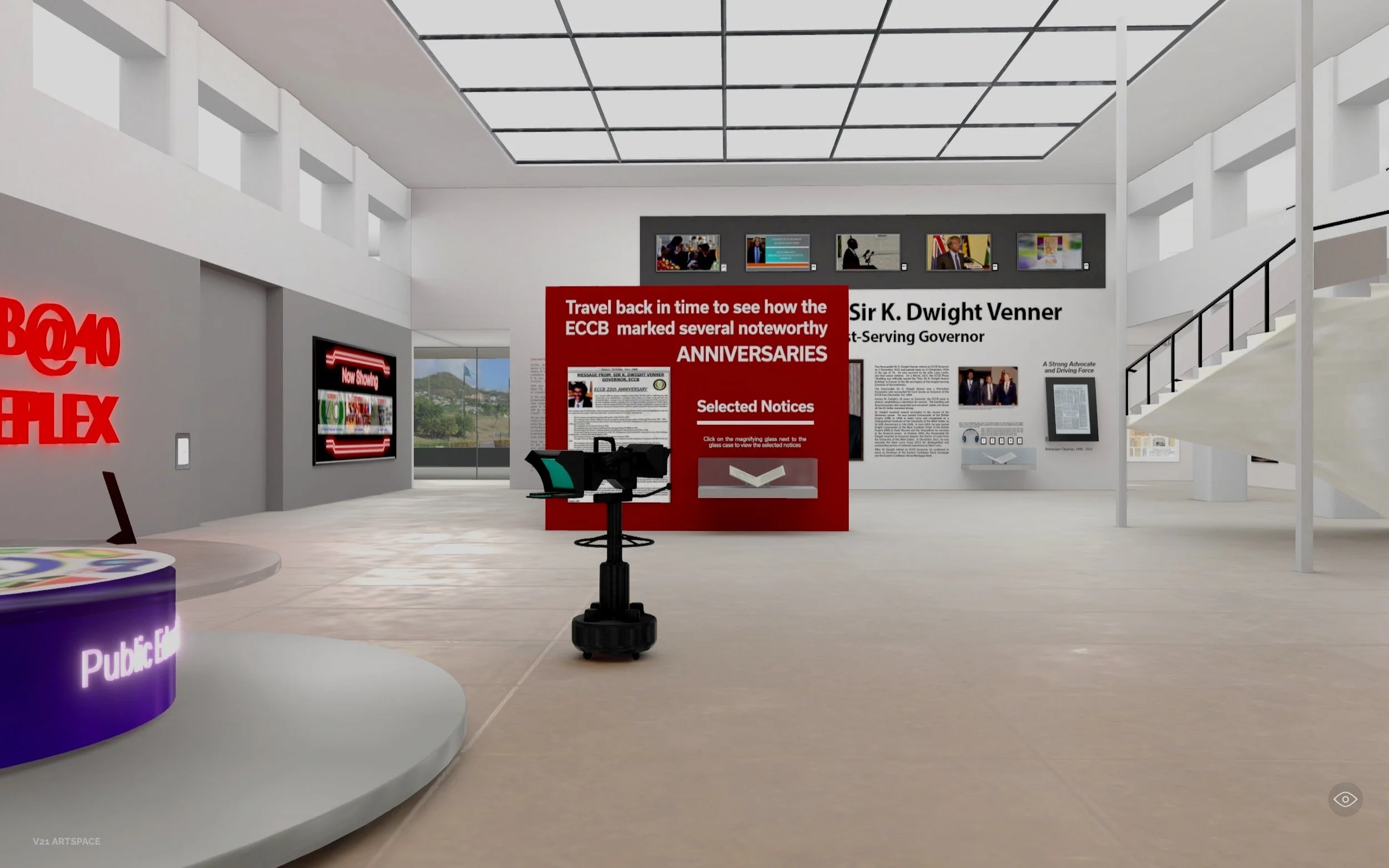
In our work with the Eastern Caribbean Central Bank, important records about the bank’s inception include substantial PDF documents that would be difficult to engage with in isolation. The virtual exhibition gives those sources context, drawing out the history and significance around them while allowing audiences to explore the original material.
View the ECCB exhibitionCapture a real exhibition, museum or heritage space as it exists.
View serviceCreate new digital architecture around a collection or institutional story.
View servicePrepare individual items for close online exploration and future reuse.
View serviceBuild an accessible web experience for collections, research and interpretation.
View serviceWe identify the audience, material, permissions, languages and the right digital format.
We capture or design the space, prepare content and build the interactive experience.
We deliver a shareable web experience with support for launch and long-term access.
No. We can capture a physical display or create a completely new virtual environment around material held in a collection or archive.
Yes. Projects can combine images, documents, video, audio, 3D objects, interpretation, links and multilingual content.
Yes. Experiences are published for browser access, making them easy to share with public audiences and stakeholders in different locations.
Tell us what you hold, who you want to reach and what you would like the digital experience to achieve.
Discuss your collection