



















Make knowledge easier to find
Organise fragmented records and explore searchable archives that help staff, researchers and audiences discover and reuse existing content.
AI Collections & Digital Opportunity
Turn collections, archives and exhibition content into useful digital resources, new audience experiences and opportunities for income.
We combine AI-assisted research with cultural expertise, design and digital production to help you decide what to develop next.
Discuss your collection or archiveFor museums, galleries, artist estates, foundations, universities and institutional collections.
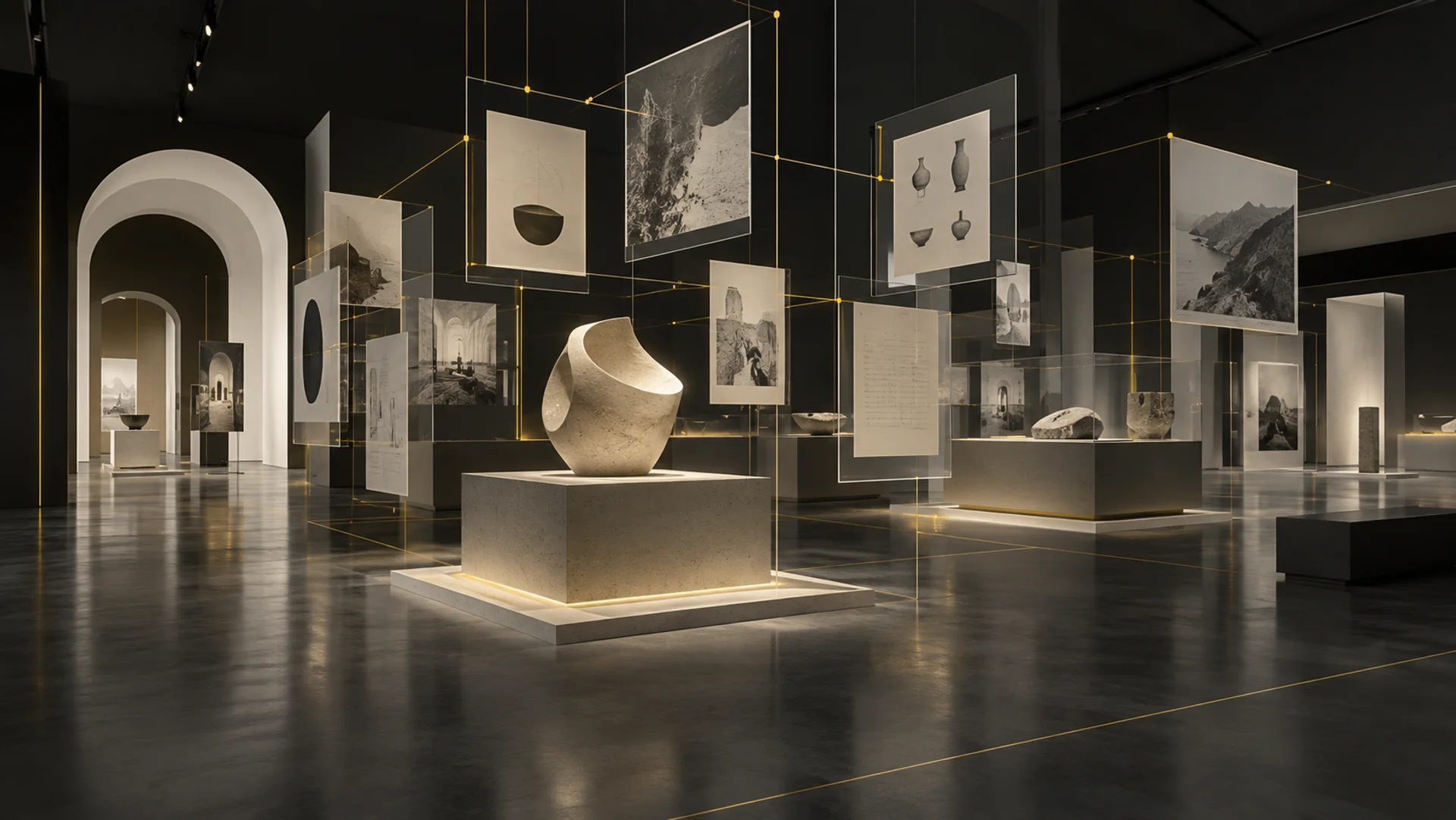
AI-generated concept illustration
Selected clients across our digital exhibition work
Catalogues, photographs, object records and recordings often sit across separate folders and systems. We help you connect that material and assess its potential against your audiences, available rights and resources.
Organise fragmented records and explore searchable archives that help staff, researchers and audiences discover and reuse existing content.
Develop digital exhibitions, education resources and interactive guides grounded in approved collection information.
Assess image licensing, sponsored programmes, paid learning resources and membership content where permissions, demand and delivery costs support a viable offer.
A focused, fixed-fee discovery project using an agreed sample of your material. Understand what is possible and which next step offers the strongest case for investment.
Sample size, scope, fee and timetable are agreed before work begins. Production and ongoing support are quoted separately.
01
Review formats, metadata quality, gaps and known reuse permissions, recording unresolved issues for your team.
02
A defined audience, intended benefit, delivery requirements, indicative budget and assumptions to validate for each option.
03
One agreed concept brought to life using approved sample material, so your team can assess how it could work.
04
A recommended pilot with its scope, responsibilities, costs and measures of success.
Our working practice
This service draws on our own work with exhibition archives, digital publishing and creative technology. These examples show where we apply AI and where specialist judgement remains essential.
Archive research and data preparation
Our archive work has included investigating how to bring together records for more than 280 exhibitions from multiple data files. The focus has been on matching reliable identifiers, removing duplication, retaining descriptions and original links, and identifying incomplete metadata.
Missing information stays flagged for review. It is not filled with invented exhibition history.
Explore the V21 archiveApplied to our own website
We use AI-assisted development to prototype interfaces, write and review code, organise service content and improve how exhibition information is presented. The multilingual service pages and their navigation are a practical example of that workflow.
Generated code and content are reviewed and tested before release, with V21 retaining responsibility for the result.
Explore online exhibition servicesCreative exploration and prototyping
We use AI to explore virtual exhibition environments, early interface ideas and visitor journeys. Concept imagery, including the visual on this page, helps make an idea tangible before committing to detailed design and production.
Concepts support discussion. They do not replace curatorial authorship, approved collection records or the team's design expertise.
Explore bespoke virtual galleriesIllustrative scenario, not a client case study
A museum holds catalogues, installation photographs, curator interviews and object records across different folders. A review could identify a searchable exhibition archive, a themed resource for schools and a sponsor-supported digital exhibition.
Each opportunity needs its own business case. Some create income; others improve access, learning or staff efficiency. Revenue is not guaranteed.
01
Assess a defined sample, clarify priorities and select a useful first application. Fixed-fee discovery.
02
Develop a scoped pilot and test it with the people who will use it. Project-based production.
03
Use feedback and agreed measures to guide improvements, add collections and plan hosting or content updates. Optional ongoing service.
AI can help organise information, identify connections and prepare material for review. Source evidence and curatorial judgement remain central. We link records to their sources, flag uncertainty and distinguish verified information from suggested interpretation. Missing provenance or attribution is never completed through guesswork.
Before processing begins, we agree which material can be used, the tools and access arrangements, and how your team will review and approve results.
No. We can begin with a representative digital sample and an overview of the wider collection. Additional scanning or transcription is scoped separately.
Describe your collection, formats, intended audiences and objectives. There is no need to send sensitive or restricted files at the enquiry stage.
We assess your website, collection systems and export options during discovery. Integration requirements and limitations are included in the proposed scope.
The review is quoted as a fixed-fee project after the sample, objectives and demonstration are agreed. Production, licensing, hosting and ongoing support are priced separately.
We agree relevant measures, such as time saved finding material, resource use, audience engagement, licensing enquiries or income from a defined offer. The pilot helps establish evidence before wider investment.
Tell us what you hold, who you want to reach and what you would like to achieve. We will help you identify a useful starting point.
Discuss your collection or archive