V21 Artspace Services
Digital Spatial Planning for Exhibitions
Spatial intelligence and strategic modelling for physical installations.
We construct precise digital models of exhibition environments to resolve spatial, technical and curatorial decisions before installation begins. Our approach strengthens governance, reduces logistical risk and ensures alignment between intent and execution.
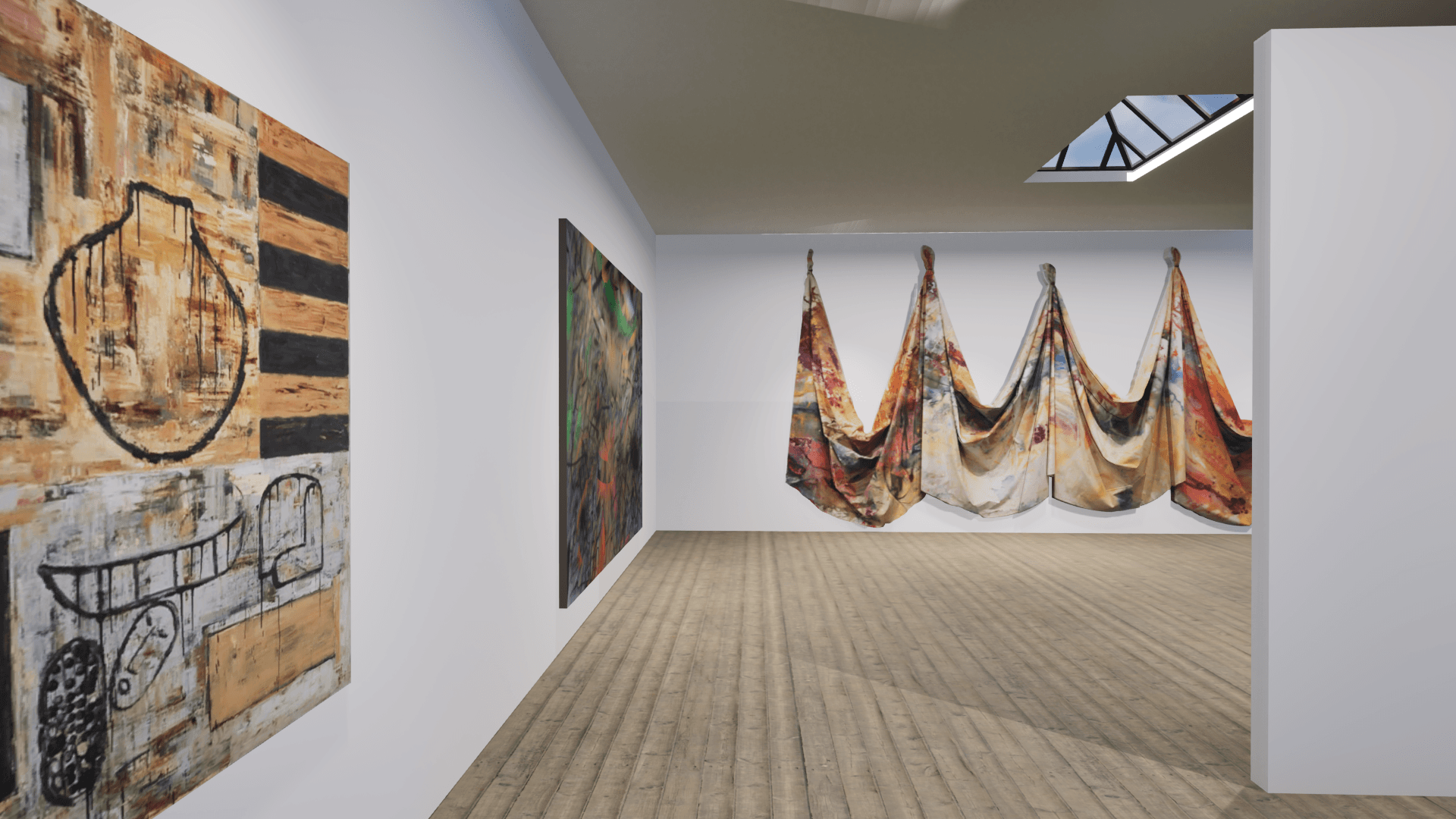
Photorealistic spatial render showing planned artwork placement
Trusted by leading cultural institutions





















- La Biennale di Venezia
- Hauser & Wirth
- Serpentine Galleries
- Arts Council Collection
- British Council
- British Library
- The Fitzwilliam Museum
- University of Oxford (GLAM)
- Design Museum
- London Museum
- The National Trust
- National Portrait Gallery
- BALTIC
- Firstsite
- The Building Centre
- Kluge-Ruhe
- Keats-Shelley House
- Southbank Centre
- Sony World Photography Awards
- Fashion Institute of Technology
- Eastern Caribbean Central Bank
- British Society for Heart Failure
- Hospital Rooms
- Nottingham Contemporary
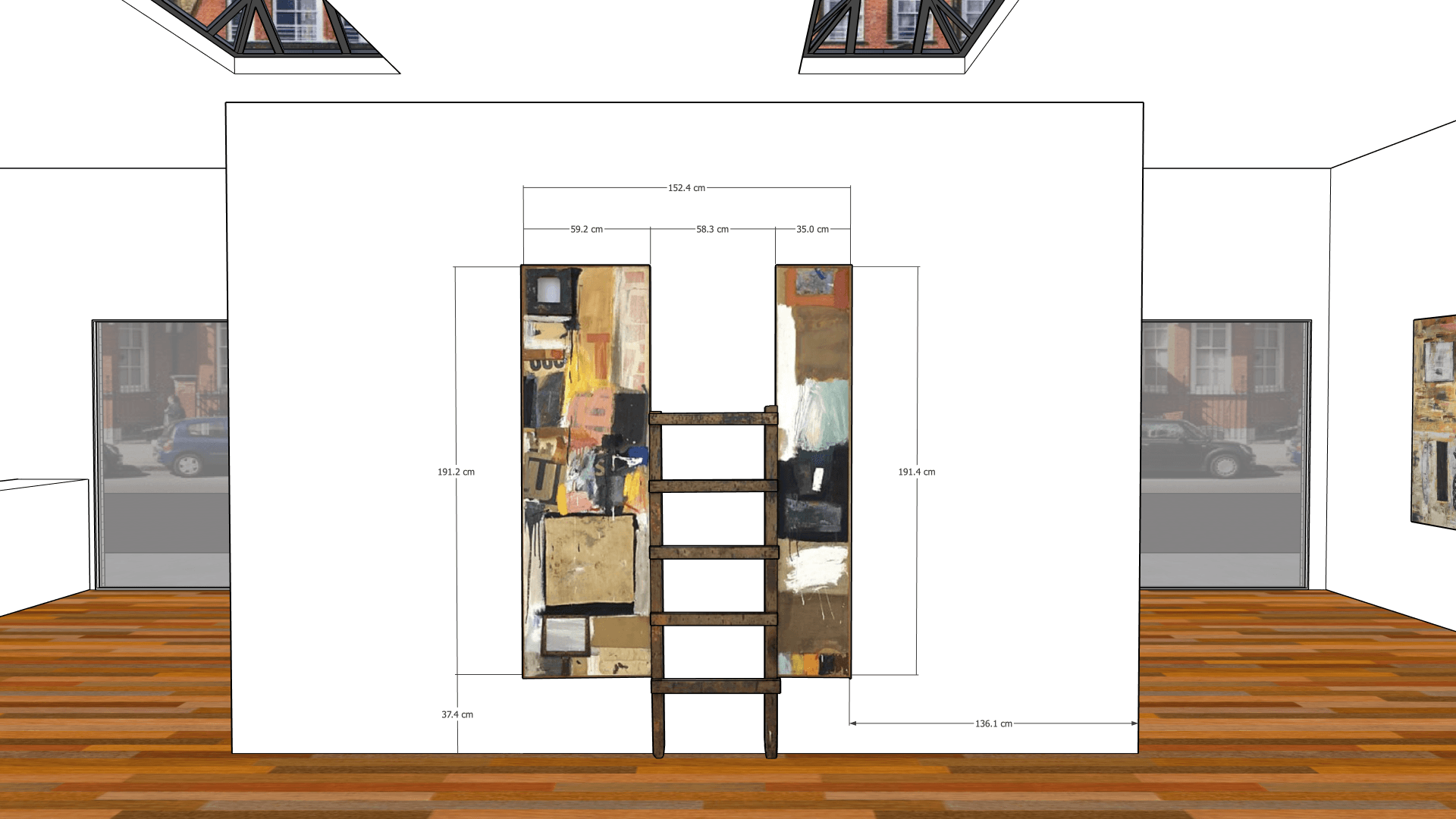
Wall elevation with artwork placement measurements
Plan Before You Install
Physical exhibitions operate within architectural realities. Ceiling heights, structural elements, access routes and circulation patterns directly shape curatorial intent and technical feasibility.
When spatial decisions are deferred to installation week, institutions absorb unnecessary risk, cost and operational pressure.
Digital Spatial Planning establishes a controlled environment in which spatial, logistical and curatorial variables are examined rigorously in advance. Through structured modelling and measured documentation, we simulate the built environment digitally, enabling informed decision-making across curatorial, technical and executive teams.
What We Do
We develop accurate digital representations of gallery architecture and scale-precise models of artworks, plinths and display systems.
Within this environment, institutions are able to:
Evaluate spatial relationships and artwork placement
Assess proportional balance and visual hierarchy
Confirm access feasibility and object movement
Analyse sightlines and visitor flow
Formalise installation documentation
Produce presentation-grade visual material for governance and stakeholder review
Our modelling workflows integrate established platforms such as SketchUp with advanced 3D environments and specialist in-house systems. Outputs are structured to meet institutional documentation standards.
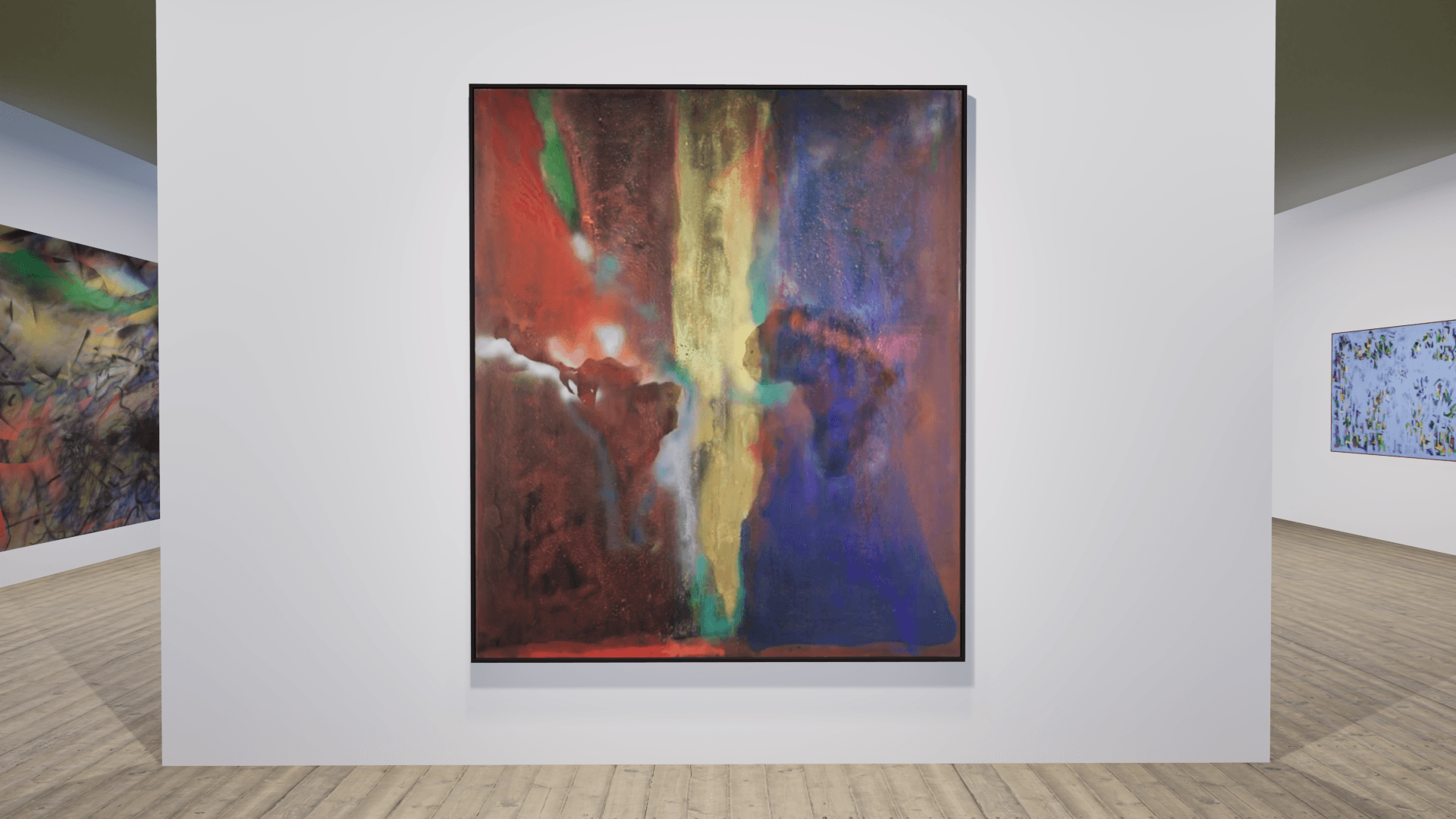
Render output showing scale, sightlines and artwork placement
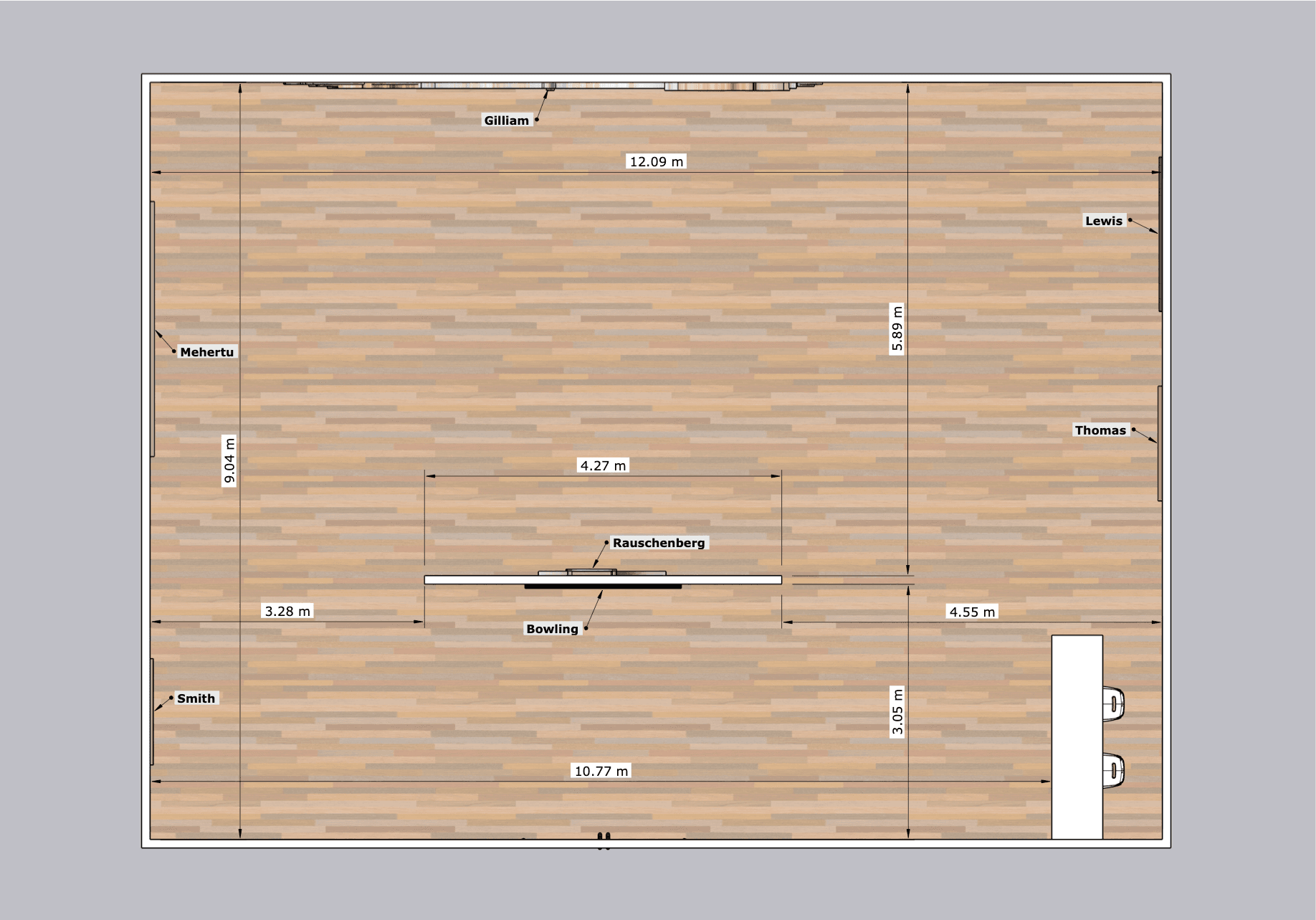
Annotated floor plan with artist positions and room dimensions
Why Digital Spatial Planning Matters
Strategic advantages across governance, finance and curatorial outcomes
Risk Governance
Architecturally complex buildings and large-scale works introduce measurable logistical risk. Digital modelling verifies access constraints, installation clearances and structural relationships prior to transport and scheduling commitments.
Financial Responsibility
Spatial revisions undertaken on site incur labour, equipment and scheduling costs. Resolving these variables digitally preserves budget integrity and reduces operational strain.
Curatorial Integrity
Narrative structure is spatially contingent. Modelling allows curatorial frameworks to be evaluated within the architectural context in which they will be experienced.
Technical Alignment
Measured elevations, floor plans and spacing schedules ensure clarity between curatorial teams and installation technicians, reducing interpretive error.
Institutional Communication
Clear spatial renders and modelling outputs support internal governance processes and external discussions with lenders, estates and funding bodies.
Long-Term Infrastructure
Structured digital spatial models form part of an institution's ongoing planning infrastructure, supporting future exhibitions, touring adaptations and archival record.
Our Process
Space Capture & Gallery Modelling
We construct a precise digital framework of the exhibition environment. Where available, modelling is derived from architectural floor plans and technical drawings. For complex or historically layered buildings, we produce detailed three-dimensional models that account for structural elements, ceiling conditions, architectural articulation and access routes.
This establishes an accurate architectural baseline for all subsequent planning.
Artwork Data & Scaled Modelling
We gather and verify dimensional and technical specifications for each artwork. Works are modelled at scale, incorporating depth, footprint and installation requirements.
Display architecture including plinths, vitrines and mounting systems can be integrated to ensure complete spatial accuracy.
Spatial Development & Iteration
Curatorial layouts are developed within the digital model. Multiple configurations can be evaluated methodically, allowing institutions to assess spatial rhythm, adjacency and circulation before finalising installation schedules.
Documentation & Visualisation
Following spatial approval, we produce structured installation documentation alongside high-resolution renders suitable for governance review and external presentation.
This ensures that the transition from digital planning to physical execution is controlled and coherent.
Deliverables
Our outputs are designed to integrate directly into institutional project management structures.
Measured floor plans
Elevation drawings with artwork placement
Scaled architectural and object modelling
Spacing schedules and sightline studies
Installation-ready documentation
Photorealistic spatial renders
Governance and lender presentation visuals
Structured digital spatial asset archives
Documentation can be delivered in formats aligned with institutional technical standards.
Who This Is For
This service is structured for organisations requiring heightened curatorial, technical or governance oversight.
Museums and public institutions
Artist estates
Architecturally complex gallery environments
Large-scale and logistically sensitive exhibitions
Get in touch
Spatial rigour strengthens exhibition outcomes.
If you are preparing an exhibition that would benefit from spatial modelling, we would welcome a conversation about how this service could support your project.